Separate Voltage and Current Connections
Understanding Separate Voltage and Current Connection
As we described in voltage measurement and current measurement:
Current Measurement
To measure current, the wire is gone through the meter and then connected to the load.
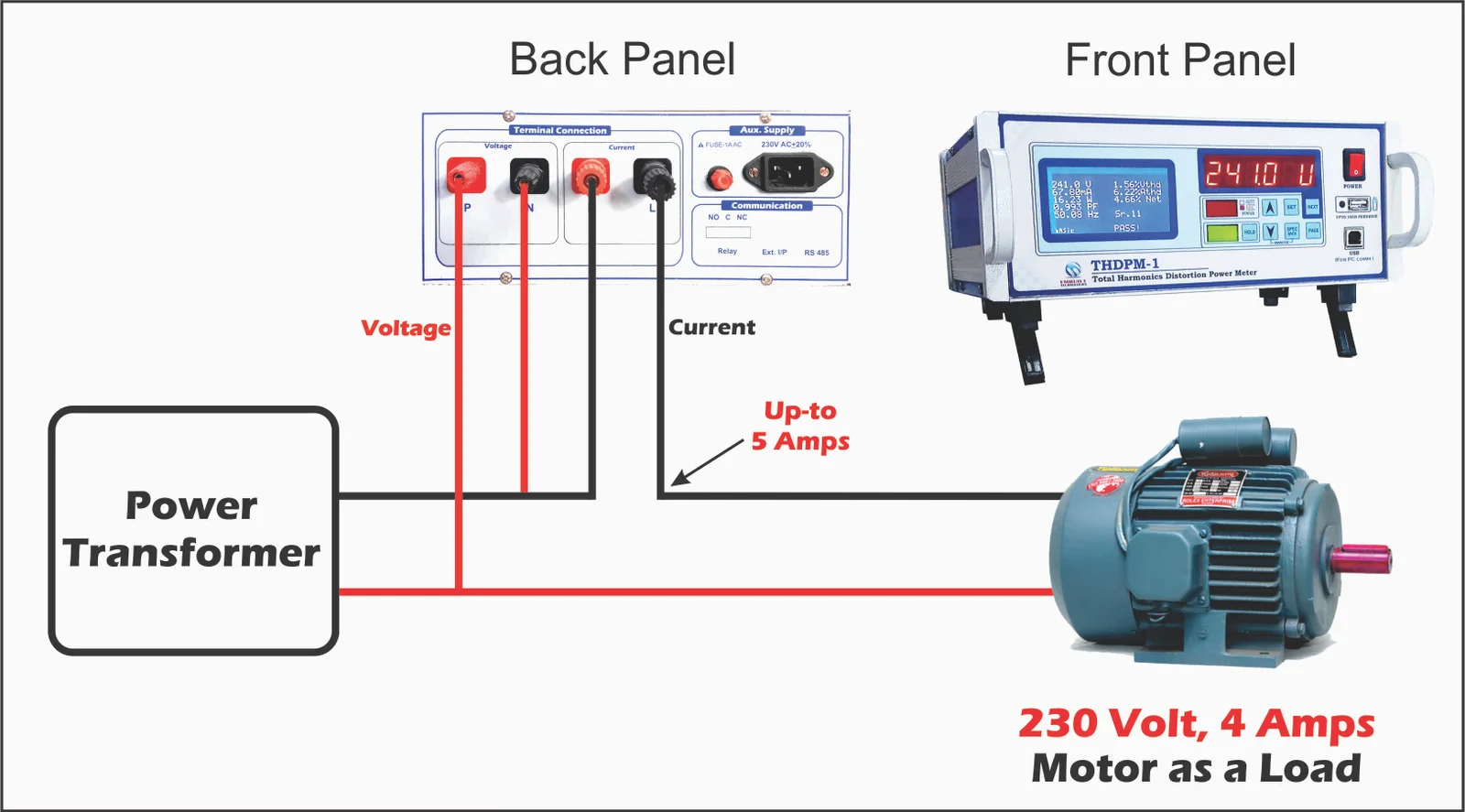
Voltage Measurement
For voltage measurement, we have connected probes parallel to the load.
By measuring voltage and current, wattage will be calculated.
Advantages of Separate Connections
- Eliminates interference between voltage and current measurements
- Provides more accurate power calculations
- Allows for independent optimization of each measurement path
- Reduces measurement errors due to loading effects
Video Explanation
Separate Voltage and Current Connection with External Clamp CT
Using an external clamp CT (Current Transformer) for current measurement provides additional safety and convenience by eliminating the need to break the circuit for ammeter insertion.
Key Benefits of Clamp CT Method
- No need to disconnect wiring for current measurement
- Enhanced safety during measurement
- Ability to measure high currents safely
- Non-intrusive measurement technique
Implementation Guidelines
- Connect voltage probes directly across the load terminals
- Insert current measuring device in series with the load
- Ensure proper polarity for both measurements
- Use appropriate range settings on measuring instruments
- Verify connections before applying power